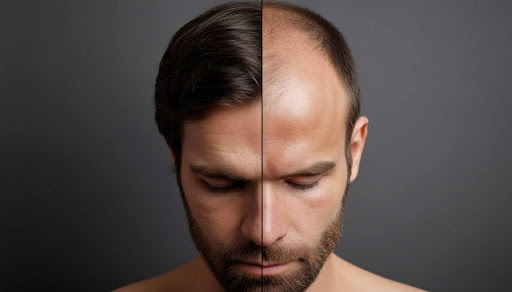
Noticing your hairline creeping back or thinning at the crown can be frustrating. For many men, that moment sends them straight online, searching for something proven that actually works.
Finasteride is usually the first name that comes up. Dutasteride tends to appear a little later, often described as the stronger alternative. That naturally leads to one big question: when it comes to dutasteride vs finasteride, which hair loss treatment really works best?
The short answer is that both work, but they suit different situations. The longer answer depends on how advanced your hair loss is, how your body responds, and how comfortable you are with strength versus long-term familiarity.
Let’s break it down clearly.
Dutasteride vs Finasteride at a Glance
| Feature | Finasteride 1 mg | Dutasteride 0.5 mg |
| Brand name | Propecia | Avodart |
| How it works | Blocks type II 5-alpha reductase | Blocks type I and type II 5-alpha reductase |
| Impact on DHT | Lowers DHT by around 40 to 65% | Lowers DHT by up to 90% |
| Strength | First-line treatment | Stronger option |
| Typical dose | 1 mg tablet once daily | 0.5 mg capsule once daily |
| Best suited for | Early to moderate hair loss | More advanced thinning or poor response to finasteride |
| UK availability | Prescription | Prescription |
Both medications target the same underlying cause of male pattern baldness, but they do so with different intensity.
How Hair Loss Medications Actually Work
Male pattern baldness, also called androgenetic alopecia, is driven by a hormone called DHT or dihydrotestosterone. In genetically sensitive hair follicles, DHT causes follicles to shrink over time. As they shrink, hair grows thinner, shorter, and eventually stops growing altogether.
Finasteride and dutasteride both work by lowering DHT levels. When DHT is reduced, follicles are protected, shedding slows down, and many follicles are able to recover enough to produce thicker hair again.
The key difference between the two medications lies in how completely they block the enzymes that create DHT.
Finasteride Explained
Finasteride blocks the type II 5-alpha reductase enzyme. This enzyme is responsible for converting testosterone into DHT in the scalp and prostate.
By targeting this specific enzyme, finasteride lowers DHT to a level that is effective for most men, especially those in the early or middle stages of hair loss. It has been prescribed for decades and has a very large body of clinical research behind it.
Because of its balance between effectiveness and tolerability, finasteride is usually the first treatment men are offered when they start addressing hair loss.
Dutasteride Explained
Dutasteride goes a step further. It blocks both type I and type II 5-alpha reductase enzymes. By shutting down both pathways, it reduces DHT far more aggressively than finasteride.
This deeper suppression of DHT is why dutasteride often works for men who continue to lose hair despite using finasteride. It is also why it is considered a stronger option rather than a first-line treatment.
In the UK, dutasteride is licensed for benign prostatic hyperplasia. When prescribed for hair loss, it is used off-label. This simply means it is approved for one condition but can be legally and safely prescribed for another when a clinician believes it is appropriate.
Effectiveness: Finasteride vs Dutasteride
Both treatments are proven to slow hair loss, increase hair count, and improve thickness. The difference is how much improvement they deliver and in which situations.
Best Option Based on Hair Loss Pattern
| Hair loss pattern | Description | Best option | Why |
| M-type | Receding temples and hairline | Dutasteride | Stronger DHT reduction benefits frontal loss |
| C-type | Thinning across the central front | Dutasteride | Often produces greater frontal density |
| V-type | Crown thinning | Either | Finasteride works well, dutasteride boosts overall count |
| Diffuse | Even thinning across the scalp | Either | Both reduce shedding effectively |
| Advanced or U-type | Widespread thinning | Dutasteride | Lower DHT helps in later-stage loss |
Finasteride taken at 1 mg daily has been shown to increase hair count by around 9.4% at 12 months and over 24% at 24 months compared to placebo. For many men, especially those who start early, this is enough to stabilize hair loss and maintain good density.
Dutasteride 0.5 mg consistently outperforms finasteride in studies. Research suggests it is around 20 to 30% more effective overall for improving hair count and thickness, particularly in men with more advanced loss.
Which Works Faster?
When hair loss starts affecting confidence, speed matters. Both medications help, but neither delivers instant results.
Dutasteride reduces DHT much faster. At a daily dose of 0.5 mg, DHT levels can drop by up to 90% within two weeks. Finasteride lowers DHT more gradually and to a lesser degree at the licensed 1 mg dose.
That said, faster DHT suppression does not mean instant regrowth. Hair grows slowly. Most men notice reduced shedding first, followed by visible regrowth after three to six months. Full results usually take 12 months or longer with either medication.
If your goal is the strongest and fastest hormonal suppression, dutasteride has the edge. If you are comfortable with steady, proven progress, finasteride remains a solid choice.
Side Effects and Tolerability
Both finasteride and dutasteride are generally well tolerated. Side effects are uncommon and usually reversible.
Side Effect Comparison
| Side effect group | Finasteride | Dutasteride |
| Sexual side effects | 1 to 8% | 1 to 7% |
| Mood changes | Rare | Rare |
| Skin or scalp reactions | Very low | Very low |
| Serious adverse effects | Very rare | Very rare |
Finasteride has a shorter half-life, leaving the body within hours. If side effects occur, they typically resolve quickly after stopping. Dutasteride stays in the system much longer, so side effects can take several weeks to fully settle if they do occur.
Sexual Side Effects Explained
The most discussed side effects involve sexual function. These may include reduced libido, erectile difficulties, or reduced semen volume.
Clinical data shows no meaningful difference in overall risk between finasteride and dutasteride. If symptoms appear, they often improve over time or resolve after stopping treatment. Because dutasteride remains in the body longer, its effects may take longer to reverse.
Mood and Mental Health Considerations
Mood-related side effects such as low mood or anxiety are listed for both medications, but they are rare in clinical studies.
Some research suggests a slightly higher reporting rate of depressive symptoms with finasteride in men who already have a history of mental health conditions. For men without such a history, there is no clear increased risk compared with dutasteride.
If you have existing mental health concerns, it is important to discuss them with a clinician before starting treatment.
Skin and Scalp Effects
Skin reactions are uncommon with both medications. Fewer than 1% of users report rashes or irritation. Neither medication is linked to long-term skin changes or increased scalp oiliness.
Choosing Between Finasteride and Dutasteride
So which one is best?
Finasteride is usually the right starting point. It has decades of use, strong evidence, and a favourable safety profile. For many men, it does exactly what they need.
Dutasteride is best suited for men with more advanced hair loss or those who have used finasteride consistently for 6 to 12 months without satisfactory results. Its stronger DHT suppression can deliver better outcomes in these cases.
Common Questions
Can you take finasteride and dutasteride together?
No. They work on the same pathway, and combining them does not improve results but does increase the risk of side effects.
Can you switch from finasteride to dutasteride?
Yes. Many men switch after giving finasteride enough time to work. Most clinicians recommend staying on finasteride for at least 6 to 12 months before considering a change.
How long do you need to take these medications?
Both require long-term use. If you stop, DHT levels rise again and hair loss usually resumes within months.
Can you use minoxidil with either medication?
Yes. Topical minoxidil can be safely combined with finasteride or dutasteride and often improves results because it works through a different mechanism.
Can women use these treatments?
No. Finasteride and dutasteride are for men only and must not be used by women, particularly during pregnancy.
Final Verdict
There is no single winner in the dutasteride vs finasteride debate. The best treatment depends on your stage of hair loss, your response to medication, and your comfort with strength versus long-term familiarity.
If you are early in the process, finasteride is often enough. If hair loss is progressing or has not responded well, dutasteride offers a stronger alternative.
Either way, consistency and patience matter far more than choosing the most powerful option on day one.